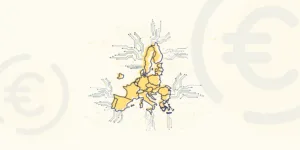
This article introduces a special issue examining how small European countries exercise agency in their relations with an increasingly assertive China. It elaborates the theoretical glue that binds these studies, summarizes their main arguments, and discusses both their specific and collective contributions. The vast power asymmetry between China and these countries, coupled with the increasing willingness to leverage these disparities, has not guaranteed Beijing’s desired results. To explain why, we open the ‘black box’ of domestic policymaking in six country case studies—Czechia, Ireland, Belgium, Hungary, Latvia, and Serbia—to reveal how domestic identities, personal interests, and institutional dynamics affect their engagement with China. These contributions shed light on how local actors manipulate resurgent great power rivalry and leverage European Union membership to advance their own interests in ways that also offer lessons for small states more generally. While traditional scholarship depicts small states as unitary actors navigating structural and resource constraints, these articles reveal how their behavior stems as much from their own internal ‘messiness’ as from Chinese influence, thus shedding light on the sources of small-state agency under highly asymmetric conditions.
The paper was originally published by Taylor & Francis.