
CEIAS

Folklorized politics: how Chinese soft power works in Central Asia

The main aim of this article is to develop a discussion on folklorization or how identity is commodified and reduced to only some cultural traits. Currently, folklorization is one of the main devices in PRC’s cultural and political policies in Central Asia. Authors analyze folklorization both inter-state with a particular focus on Kazakhstan and Kyrgyzstan,… Continue reading Folklorized politics: how Chinese soft power works in Central Asia

Friends or foes? How diverging views of communist past undermine the China-CEE ‘16+1 platform’

China and the Central and Eastern European (CEE) countries have been engaged recently in dynamic diplomatic exchanges under the umbrella of 16+1 platform and the Belt and Road Initiative. The article offers an explanation of why the massive Chinese diplomatic effort did not lead to an improved image of China in the CEE region. We… Continue reading Friends or foes? How diverging views of communist past undermine the China-CEE ‘16+1 platform’

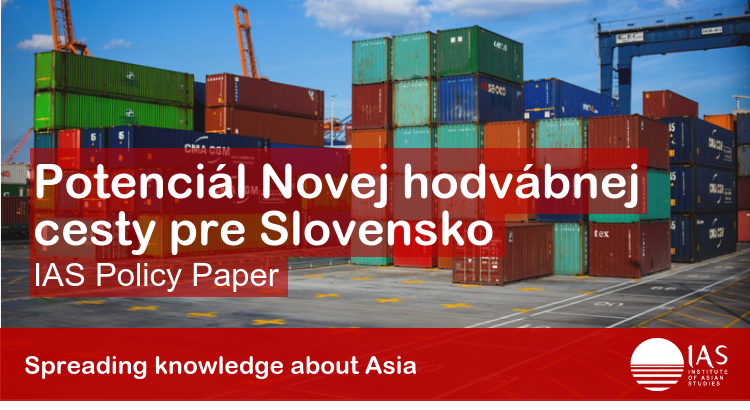
Potenciál Novej hodvábnej cesty pre Slovensko

Policy paper “Potenciál Novej hodvábnej cesty pre Slovensko” sa zoberá vývojom čínskej inciativý Nová hodvábna cesta (angl. Bel and Road Initiative, BRI) a možnostiach, ktoré iniciatíva poskytuje pre Slovensko a rozvoj slovensko-čínskych vzťahov. Odporúčania pre Slovensko Čína a čínske iniciatívy BRI a 16+1 si vyžadujú špecifický prístup. Slovensko potrebuje vyvinúť väčšiu aktivitu ako doteraz, tá… Continue reading Potenciál Novej hodvábnej cesty pre Slovensko

China’s twofold CPEC strategy in Pakistan

On August 11, 2018 eighteen Chinese workers on a bus were approaching Dalbandin, city just 340 km away from the provincial capital Quetta, which has been repeatedly attacked by local terrorists. As they got closer to the site, workers from Saindak Copper Gold Mine, controlled by Chinese state-owned enterprise Metallurgical Corporation of China (MCC), were… Continue reading China’s twofold CPEC strategy in Pakistan

Chinese Trade and Investment in the Visegrad Countries: Mapping Increased Exposure and Volatility

The policy paper by Martin Šebeňa looks into trade and investment relations of China and V4 countries. A Central European manufacturing nexus has emerged in the past three decades, encompassing Germany, Austria and the four Visegrád countries. In this regard, a scrutiny of trade statistics based on value-added methodology indicates a significant increase in exposure of V4… Continue reading Chinese Trade and Investment in the Visegrad Countries: Mapping Increased Exposure and Volatility

office@ceias.eu

Dunajská 37
81108 Bratislava
Slovakia

Sign up for our newsletter to receive the latest news and updates from CEIAS.

All rights reserved.

© CEIAS 2013-2024