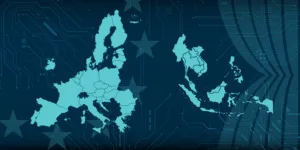
The Southeast Asia Program seeks to deepen understanding of the Southeast Asia region by analyzing the foreign policy, security, and economic strategies of ASEAN and its eleven member states. It examines their relationships with major global powers—including China, the United States, Japan, Australia, India, and the EU—with particular attention to the strategic approaches they adopt, such as hedging.
Southeast Asia, home to 700 million people and some of the world’s fastest-growing economies, is becoming an increasingly important region on the global stage. However, it is also beset by domestic and regional security and development challenges. These include unresolved territorial disputes in the South China Sea, ongoing human rights abuses committed by Myanmar’s military regime, the growing impact of climate change, and the rising prevalence of cyber scams.
The program also examines the engagement of the EU and Central and Eastern European countries with ASEAN and its member states across various areas, including politics, economics, security, civil society, academia, and technology. Additionally, it examines Southeast Asia’s interactions with other international actors and tracks key domestic developments that shape the region. In addition to research, the program hosts public events and offers policy recommendations to a range of stakeholders.