Filip Šebok
Head of Prague Office
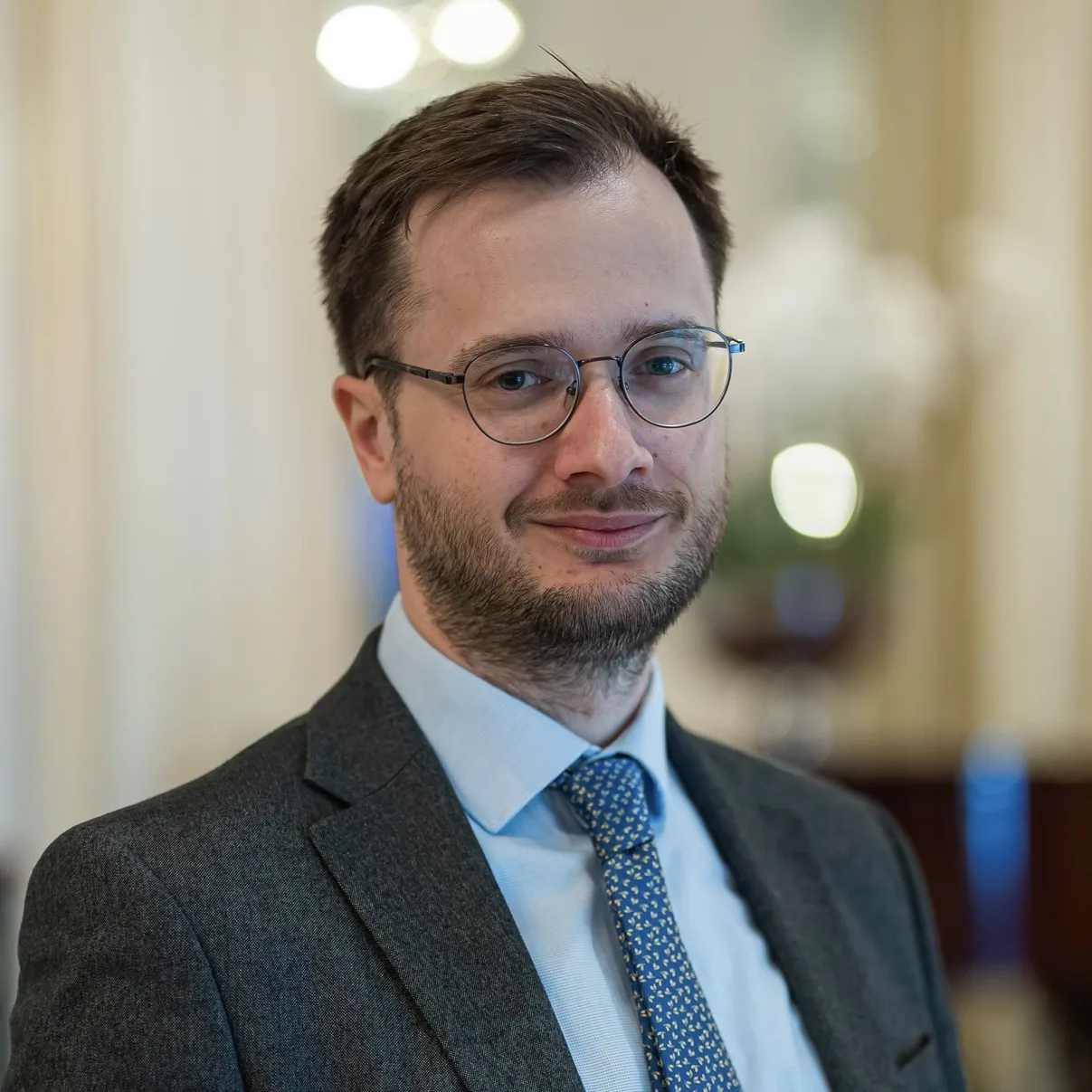
Filip Šebok is the Head of Prague Office of the Central European Institute of Asian Studies.
Filip’s research primarily looks at Chinese foreign policy, especially China-EU ties and relations between China and Central and Eastern European countries as well as China’s propaganda and disinformation. He is also leading CEIAS involvement in the CHIPDPLO project, focusing on semiconductor geopolitics. He graduated in International Relations and Chinese Cultural Studies at Masaryk University in Brno, Czech Republic, and Renmin University in Beijing, studying in a full-time program taught in Mandarin. He is currently pursuing his PhD. at the Asian Studies Department of the Palacký University in Olomouc.
Between 2019 and 2024, Filip worked as a China Research Fellow and Project Manager on the MapInfluenCE and China Observers in Central and Eastern Europe (CHOICE) projects at the Association for International Affairs (AMO), including as the editor of all CHOICE publications. He has previously worked for CEIAS between 2014 and 2019 and Stratpol (now Adapt Institute). Filip was a Fall 2022 CEPA James S. Denton Fellow in Washington, D.C. and is an individual member of the European Centre of Excellence for Countering Hybrid Threats (Hybrid CoE) Expert Pool.
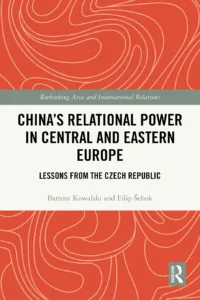
Filip is the author of several reports, analyses and book chapters, including the book “China’s Relational Power in Central and Eastern Europe: Lessons from the Czech Republic”, cowritten with Bartosz Kowalski.
Research interests: Chinese foreign policy, China-EU and China-CEE relations, Chinese propaganda and disinformation, semiconductor geopolitics
 Echoes and resistance: China’s discourse power and public perceptions in Central Europe
Filip Šebok, Veronika Blablová, Sebestyén Hompot, Marcin Jerzewski, Joanna Nawrotkiewicz, Kara Němečková, Matej Šimalčík, Róbert Vancel
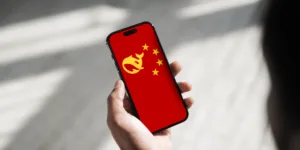 Situation report: China’s AI in Central European social media narratives
Filip Šebok, Veronika Blablová, Sebestyén Hompot, Marcin Jerzewski, Joanna Nawrotkiewicz, Kara Němečková, Róbert Vancel, Matej Šimalčík
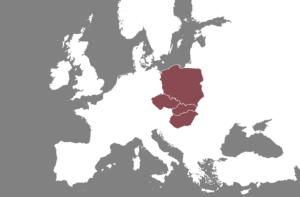
 Central Europe-East Asia EV nexus: Tracking Chinese, South Korean and Japanese electric vehicle and battery investment in the V4 countries
Martin Šebeňa, Kara Němečková, Konrad Popławski, Agnes Szunomár, Veronika Blablová, Marcell Kovács, Benedykt Kurtyka, Filip Šebok, Richard Turcsányi
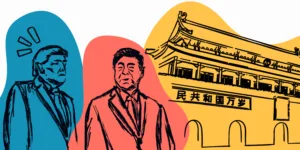
 Situation report: Reflecting on the EU-China-US triangle on V4 social media
Filip Šebok, Veronika Blablová, Sebestyén Hompot, Marcin Jerzewski, Joanna Nawrotkiewicz, Kara Němečková, Róbert Vancel, Matej Šimalčík
 EU Voters’ Views on China Tracker
Veronika Blablová, Richard Turcsányi, Filip Šebok
 Situation report: Contested narratives about China on V4 social media
Filip Šebok, Veronika Blablová, Sebestyén Hompot, Marcin Jerzewski, Joanna Nawrotkiewicz, Kara Němečková, Róbert Vancel, Matej Šimalčík
 Situation report: Debating Chinese EVs on social media in Central Europe
Filip Šebok, Veronika Blablová, Sebestyén Hompot, Marcin Jerzewski, Joanna Nawrotkiewicz, Kara Němečková, Matej Šimalčík, Róbert Vancel
 China’s propaganda and disinformation campaigns in Central Europe
Ivana Karásková, Alicja Bachulska, Tamás Matura, Matej Šimalčík, Filip Šebok
 Handbook for stakeholders: China’s sticks and carrots in Central Europe
Ivana Karásková, Alicja Bachulska, Barbara Kelemen, Tamás Matura, Matej Šimalčík, Filip Šebok
 China’s Sticks and Carrots in Central Europe: The Logic and Power of Chinese Influence
Ivana Karásková, Tamás Matura, Alicja Bachulska, Barbara Kelemen, Matej Šimalčík, Filip Šebok
 Why using the term ‘Chinese virus’ isn’t quite right
Matej Šimalčík, Richard Turcsányi, Kristina Kironska, Filip Šebok
Prečo nie je dobré používať pojem “čínsky vírus”
Richard Turcsányi, Kristina Kironska, Matej Šimalčík, Filip Šebok